
Before the Building Looks Beautiful, the Foundation Strategy Has to Be Right
A premium backyard building should not be set on a casual base. The foundation strategy should be matched to the site, slope, drainage, soil firmness, building size, intended use, floor system, utility plans, and long-term ownership expectations.
Foundation planning begins during the site review, before the final gravel pad, pier layout, slab, or other base system is prepared. From there, the correct strategy may be a gravel pad ready for 6×6 ground-contact pressure-treated foundation beams, a gravel pad with concrete piers, a concrete slab, a slab with thickened edges or footings, or a more specialized foundation approach for larger or more permanent backyard buildings.
What Is the Best Foundation for a Premium Backyard Building?
The best foundation for a premium backyard building is the foundation that keeps the structure level, supported, drained, elevated above avoidable moisture, and matched to the exact site conditions and intended use.
The right foundation depends on building size, soil firmness, slope, drainage, access, local requirements, and whether the structure will be used for simple storage, a workshop, a backyard office, a garden building, a pool house, or a finished retreat-style space.
In plain terms, the foundation should do four jobs: carry the building, keep the floor system stable, move water away from the structure, and reduce moisture exposure where wood and ground conditions meet.
Compare the Foundation Strategies Before You Choose the Building Details
This visual section belongs near the top of the Foundation Guide because homeowners need to understand the structural strategy before they become attached to siding, doors, windows, porches, or interior finish plans.
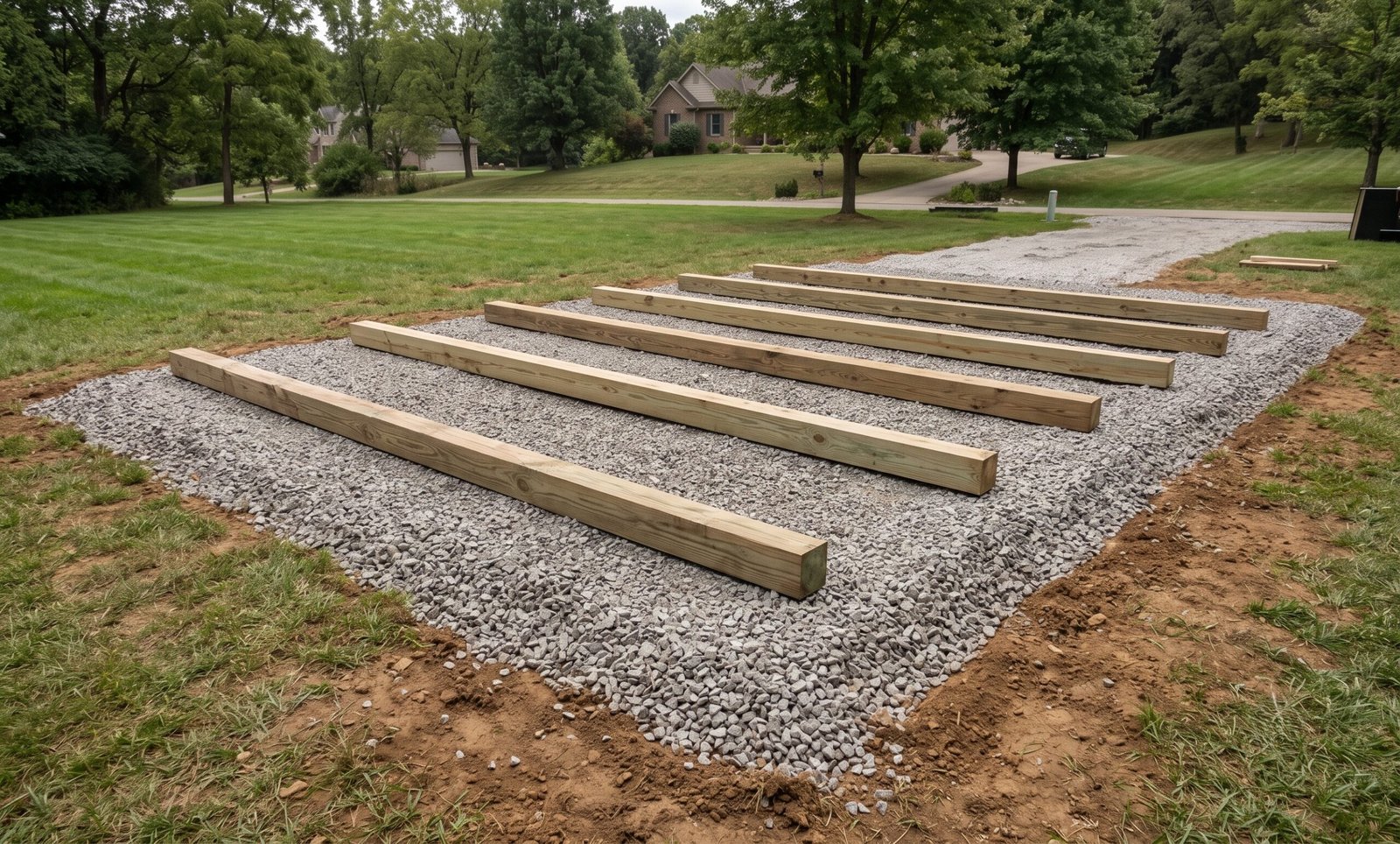
Gravel Pad With 6×6 Ground-Contact PT Foundation Beams
This is the primary premium shed foundation path when the site is suitable: a prepared gravel pad that drains well, supports the building, and is ready for 6×6 ground-contact pressure-treated foundation beams.
- Best for: most premium sheds, workshops, studios, garden buildings, and backyard offices with framed floors.
- What the image should show: finished level gravel pad, clean perimeter, clear access, and 6×6 beam layout staged or installed.
- Builder’s caution: the gravel pad must be more than loose decorative stone; it should be properly prepared, leveled, and drained.
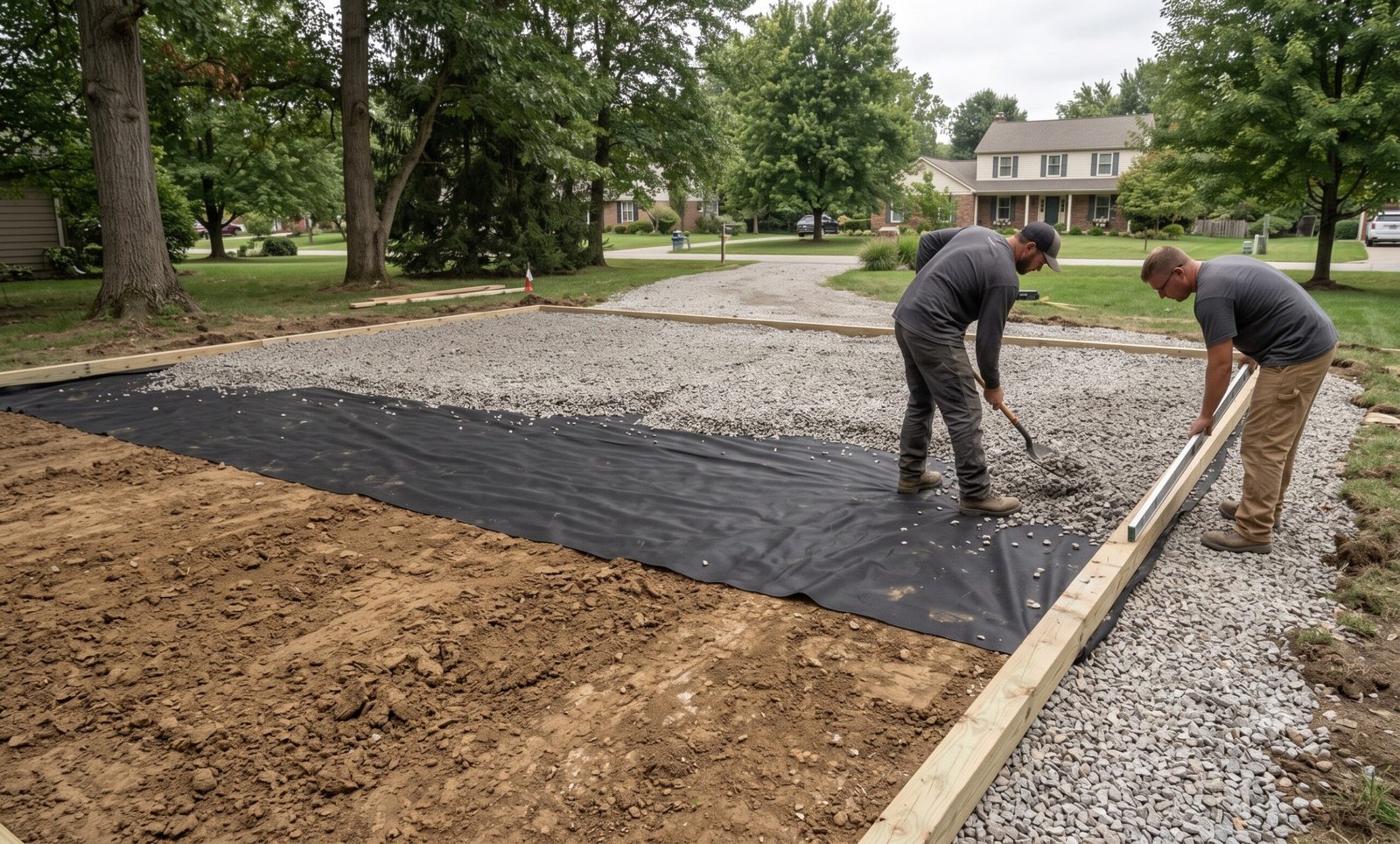
Gravel Pad With Fabric, Perimeter, and Clean Crushed Stone
This image explains the hidden layers that make a gravel pad perform: cleared subgrade, compacted soil, stabilization fabric, pressure-treated perimeter, and clean crushed stone.
- Best for: homeowners who need to understand why all gravel pads are not equal.
- What the image should show: cutaway or in-progress pad with fabric under stone and a defined perimeter.
- Builder’s caution: rounded river stone should not be treated the same as angular clean crushed stone.
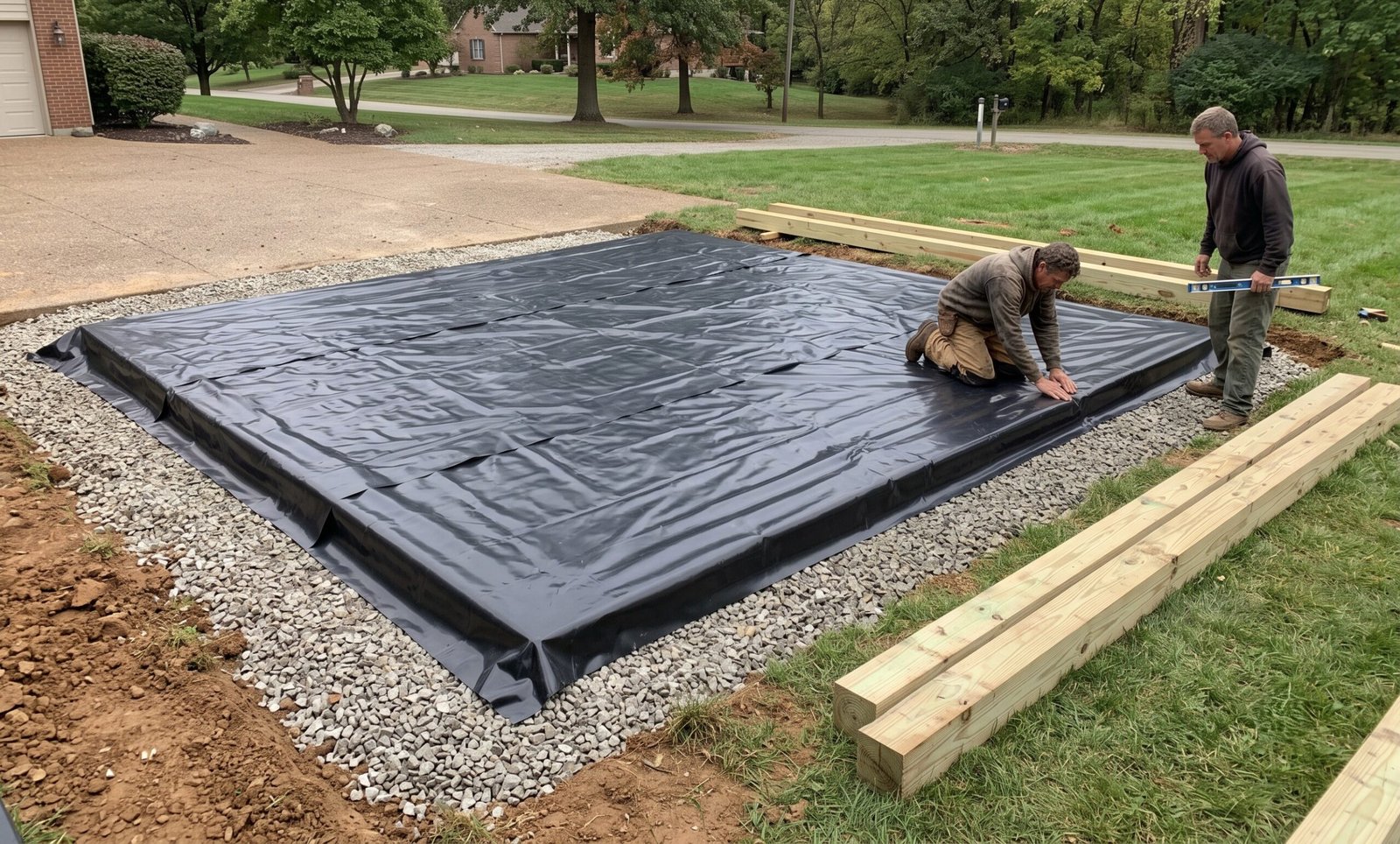
Moisture-Control Layer Before Beam Placement
Where The Vintage Shed Company’s standard calls for it, a 10 mil moisture barrier is installed before the 6×6 ground-contact pressure-treated foundation beams are placed. This is separate from stabilization fabric below the gravel.
- Best for: showing TVSC’s moisture-conscious foundation sequence.
- What the image should show: finished pad, moisture barrier placement, and beam layout readiness.
- Builder’s caution: stabilization fabric belongs under the stone; the 10 mil barrier is a separate moisture-control step before beams.
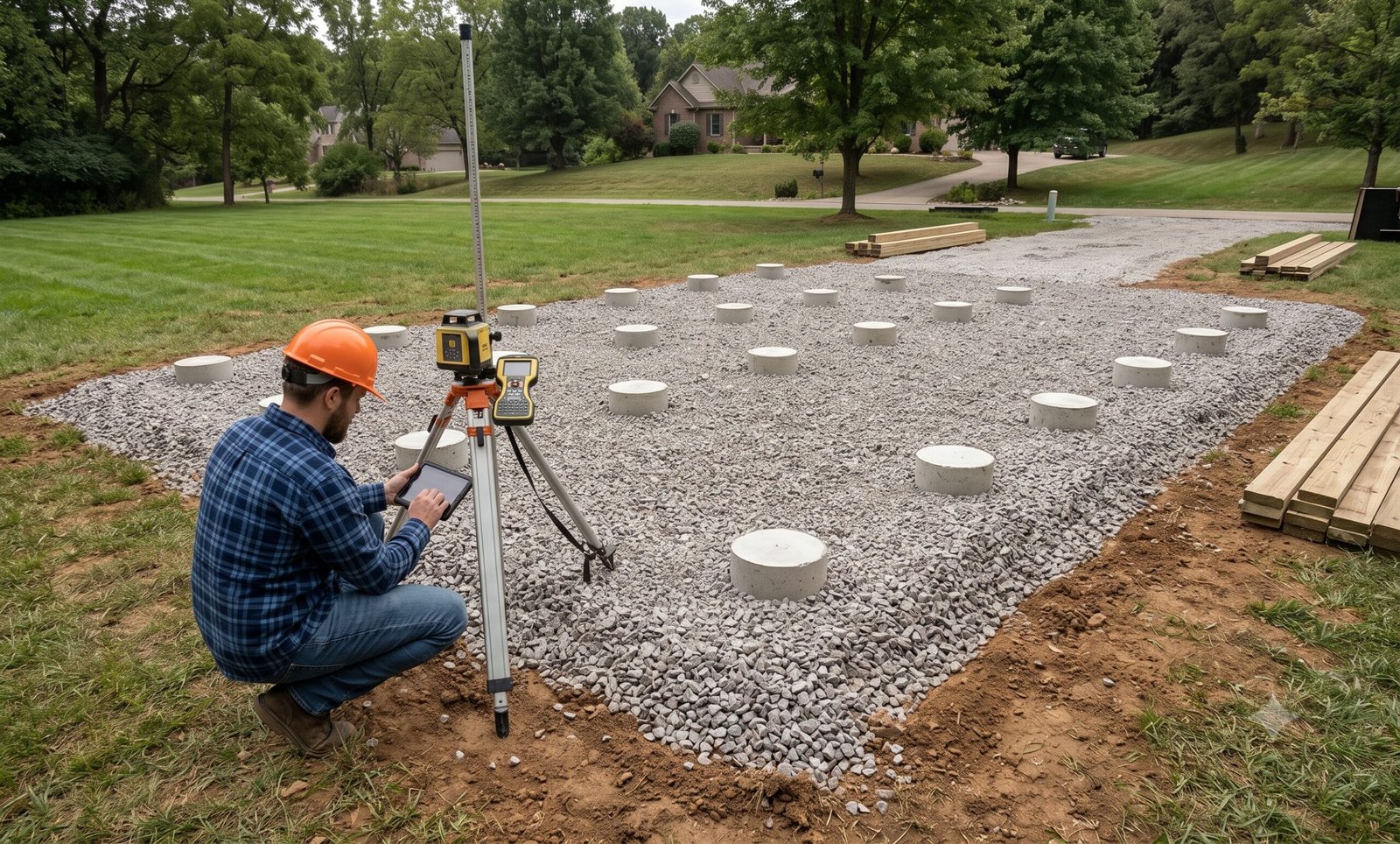
Concrete Piers Combined With a Gravel Pad
Concrete piers can provide frost-conscious support where required or where the building needs defined bearing points. Combining piers with a gravel pad can support the structure while still helping water move away from the wooden base.
- Best for: sloped sites, larger buildings, frost-footing requirements, or more permanent structures.
- What the image should show: concrete piers located within or through a gravel pad, aligned with the building load path.
- Builder’s caution: pier locations should match the actual floor and beam layout, not be guessed after the fact.
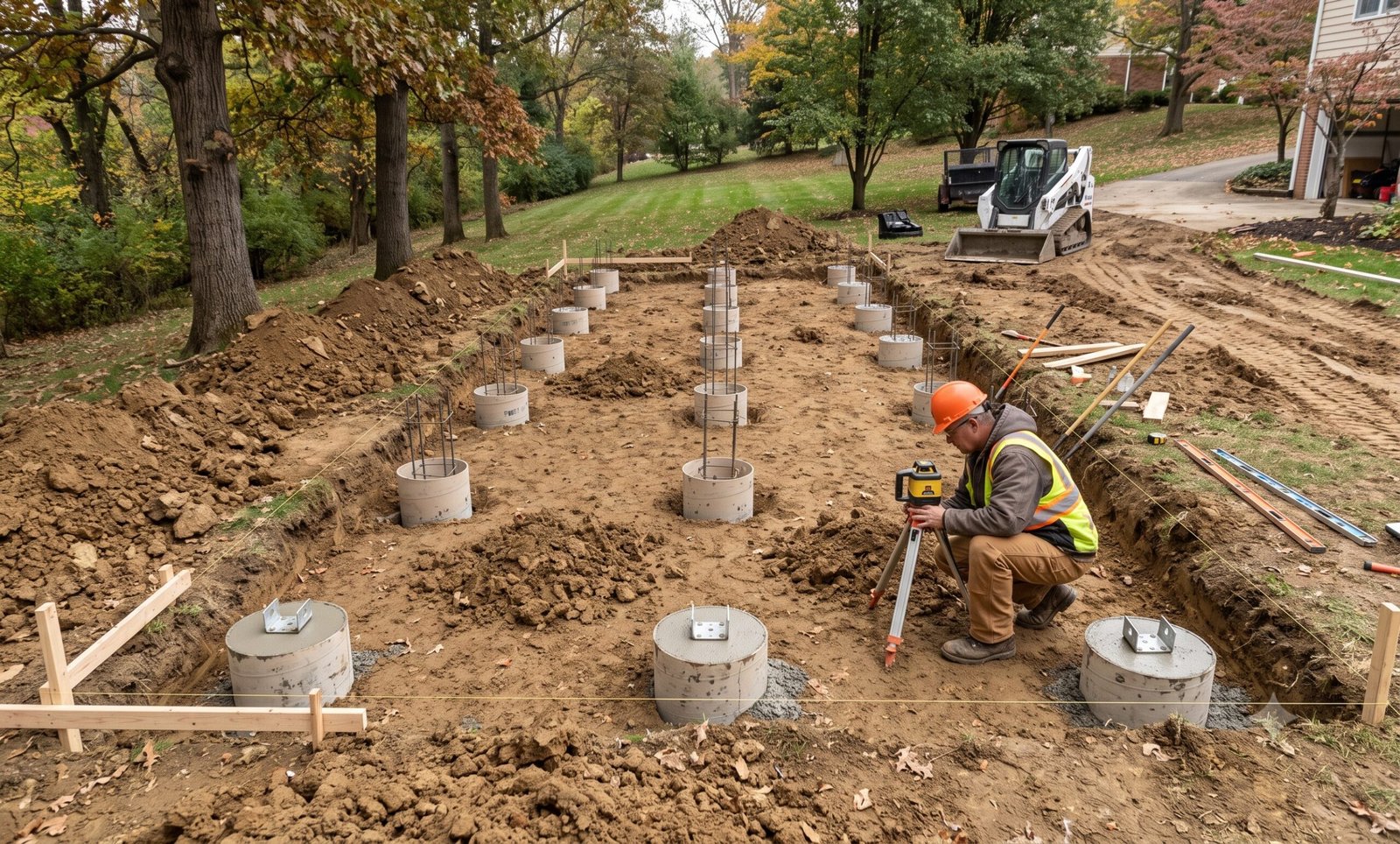
Poured Concrete Pier Footings
Poured piers may be appropriate when code, slope, frost depth, building size, anchoring, or long-term permanence requires a more structural bearing strategy.
- Best for: support designed around applicable frost-depth requirements, larger buildings, steeper grades, heavier uses, or local requirements.
- What the image should show: drilled pier holes, round forms, poured piers, and beam attachment readiness.
- Builder’s caution: simple deck blocks sitting on grade should not be presented as the same thing as poured structural piers.
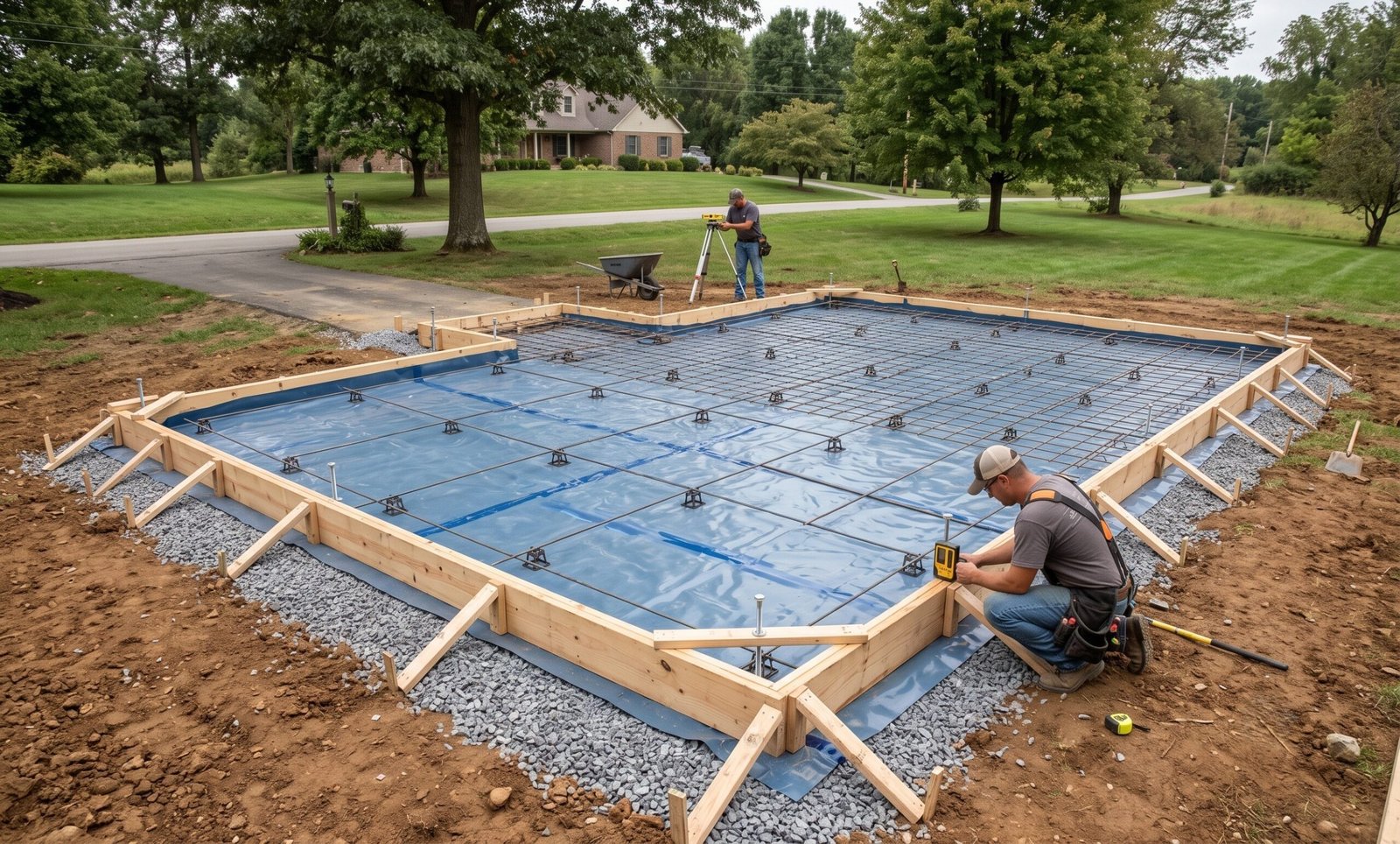
Concrete Slab Foundation
A concrete slab can be a strong choice for certain workshops, equipment uses, garage-style buildings, or more permanent backyard structures when it is designed as a complete foundation system.
- Best for: workshops, equipment storage, garage-style use, and buildings without a wood framed floor.
- What the image should show: formed slab area, compacted base, vapor/moisture planning, and clean finished slab.
- Builder’s caution: slab elevation, drainage, thresholds, anchoring, cracking control, and vapor behavior must be planned.
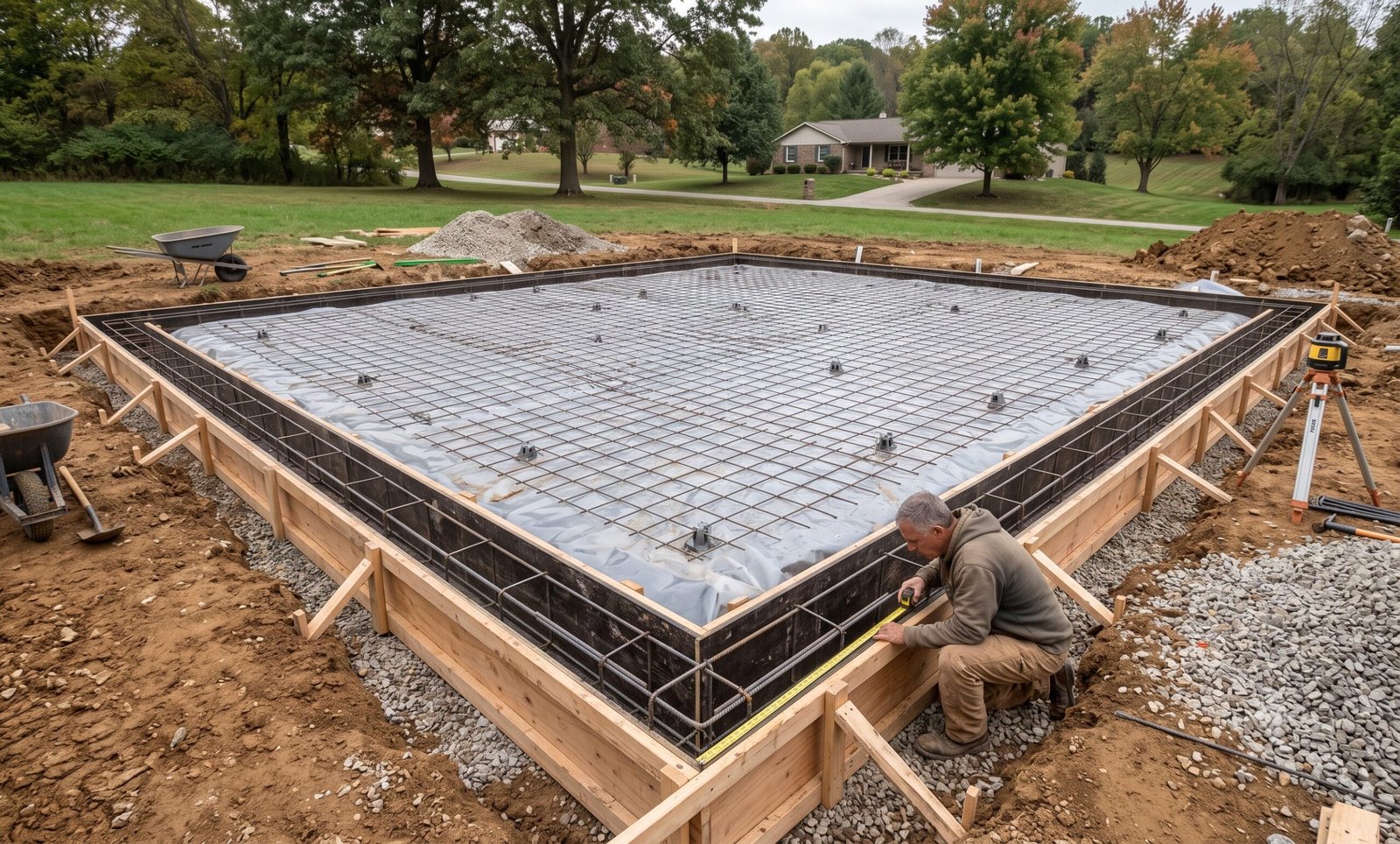
Thickened-Edge or Monolithic Slab
A thicker-edge slab or monolithic-style slab may be considered where a heavier or more permanent structure needs more than a basic flat concrete pad.
- Best for: larger structures, garage-style buildings, heavier loads, or local design requirements.
- What the image should show: formed slab edge, deeper perimeter, reinforcement, compacted stone base, and pour-ready layout.
- Builder’s caution: this is not a casual shed pad; it belongs in a more engineered or code-reviewed conversation.
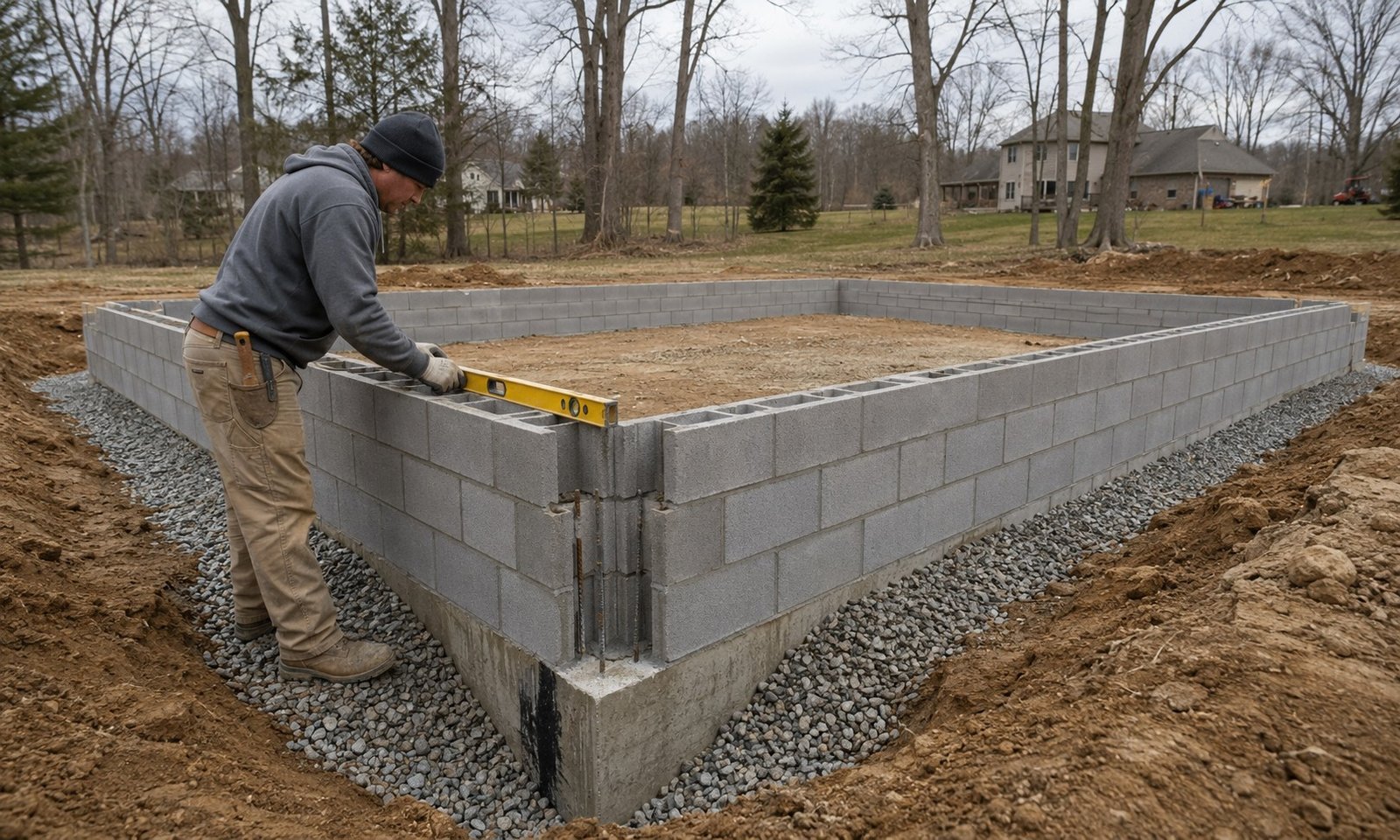
Concrete Block Wall Foundation
A concrete block wall foundation is a more substantial strategy typically reserved for larger, garage-style, two-story, or more permanent structures where simple on-grade support is not appropriate.
- Best for: large buildings, garage-style structures, or projects reviewed as more permanent construction.
- What the image should show: masonry block foundation wall, footing, gravel drainage, and building-ready top course.
- Builder’s caution: this should not be confused with loose cinder blocks placed directly under a shed.
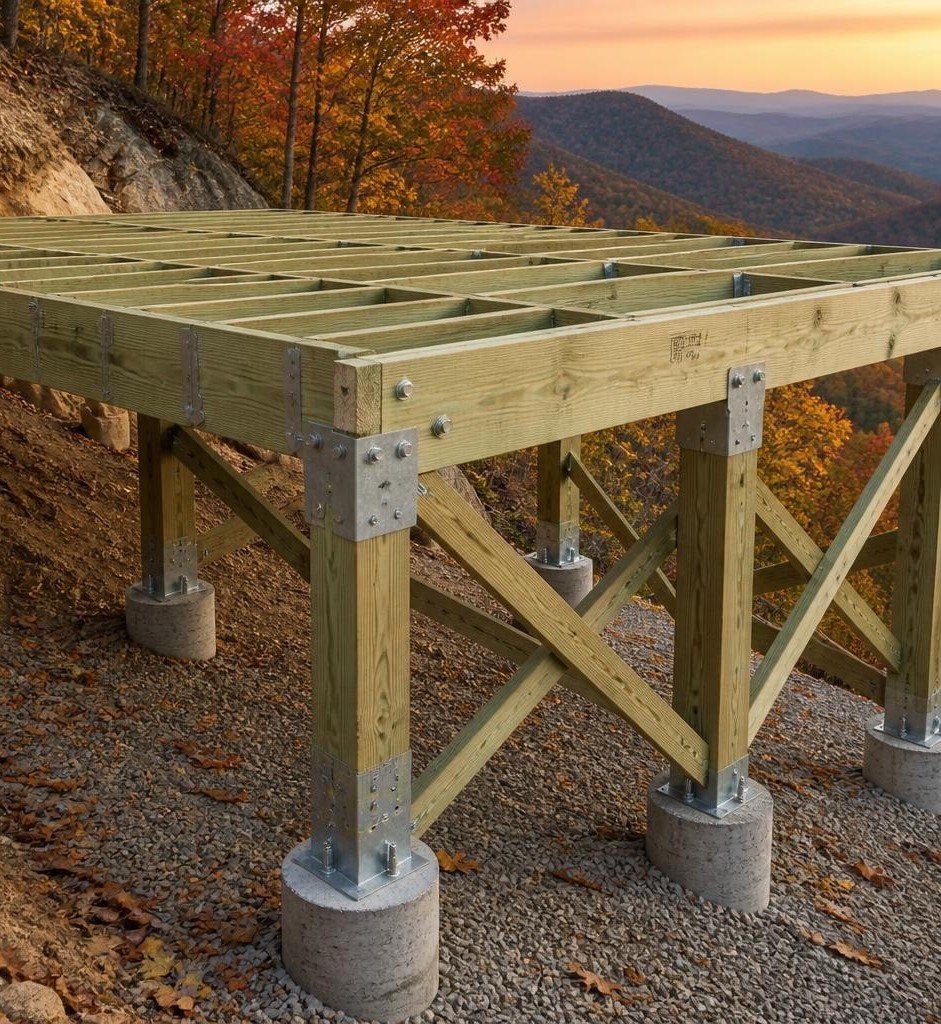
Pier-and-Beam or Post Support for Challenging Sites
Some sloped or difficult sites may require a raised support approach instead of forcing a large amount of grading into the yard. This strategy should be planned carefully around lateral stability, bracing, drainage, access, and local requirements.
- Best for: sloped lots, raised floor conditions, difficult access, or terrain-sensitive placement.
- What the image should show: posts or piers supporting beams on a sloped site with clear bracing and load path.
- Builder’s caution: raised support should not be improvised; bracing, anchoring, and code review may matter.
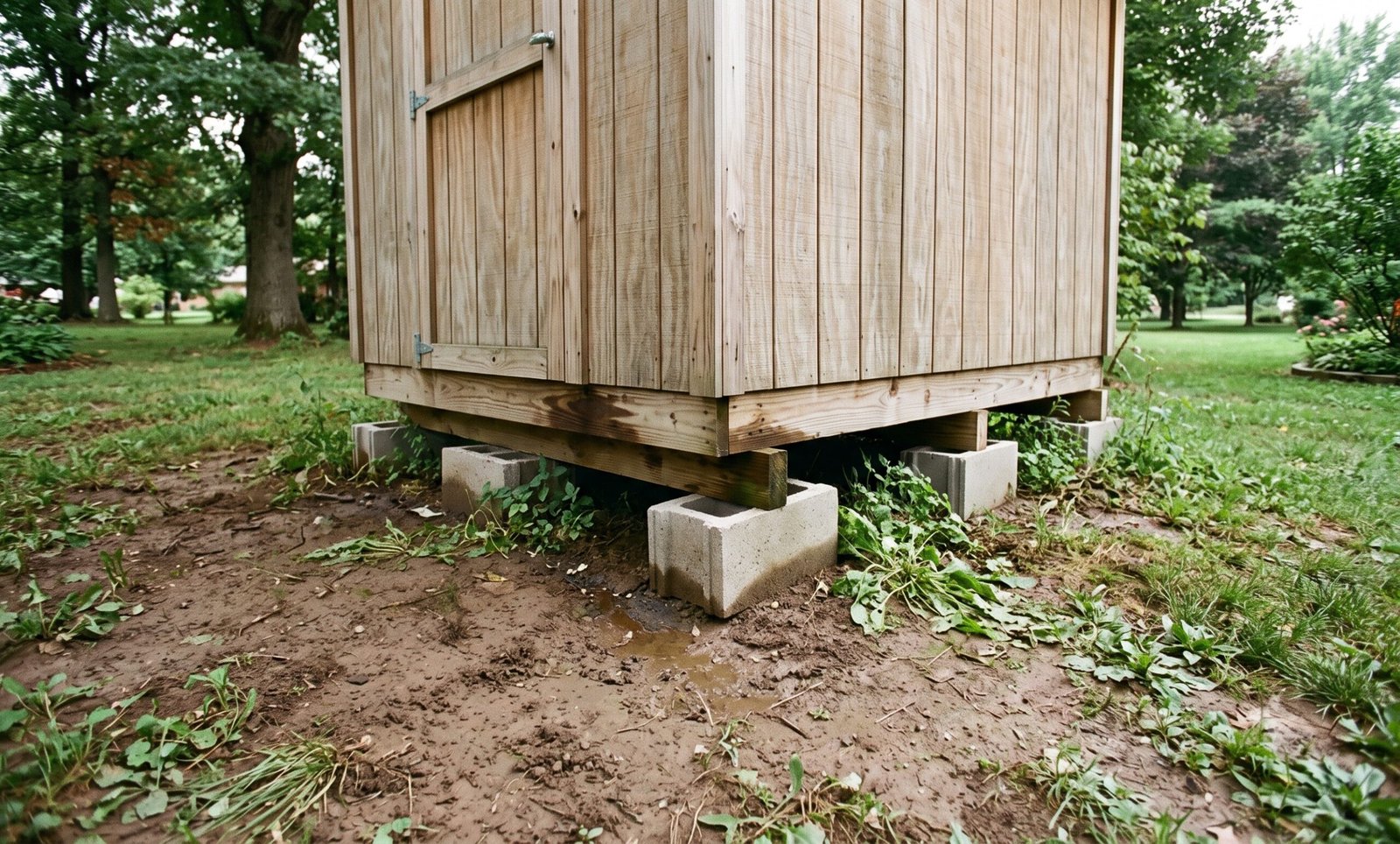
Not Recommended: Loose Blocks on Bare Ground
Loose cinder blocks or deck blocks placed directly on the ground may look simple and inexpensive, but they can concentrate loads, shift, settle unevenly, and create long-term alignment problems.
- Best for: a warning image that explains what premium foundation planning avoids.
- What the image should show: blocks on uneven ground, poor contact, moisture exposure, or obvious instability.
- Builder’s caution: do not present this as equivalent to a prepared gravel pad, poured piers, or a properly designed footing system.
A Backyard Building Foundation Has Four Non-Negotiable Responsibilities
The appearance of the building depends on craftsmanship. Long-term performance depends on how well these four responsibilities are handled.
Carry the Structure
The base must support the building’s weight, interior loads, roof loads, people, stored items, tools, equipment, and future use without allowing isolated settlement or floor distortion.
Move Water Away
Water should move away from the structure. The foundation plan should reduce ponding, splash-back, trapped moisture, and soil contact conditions that shorten material life.
Keep the Building Level
Doors, windows, rooflines, trim, and interior comfort all depend on a level structure. A building that settles unevenly can lose the crisp, finished feel premium buyers expect.
Protect the Floor System and Materials
Wood, siding, trim, and floor systems perform best when the foundation plan respects air movement, grade clearance, ground-contact exposure, and moisture control.
Real Backyard Conditions Matter More Than a Perfect Catalog Photo
Foundation planning is rarely just a product choice. It is a site judgment. A structure placed on a high, well-drained, level area has a different risk profile than one placed near a low corner of the yard, a downspout discharge, a shaded fence line, a drainage swale, or the bottom of a slope.
The problem with many ordinary backyard building installations is that the base is treated as “good enough” if the building looks level on day one. That is not a premium standard.
A more durable approach looks at where water goes after a storm, how the soil behaves, whether the structure has airflow below the floor, and whether future maintenance will be practical.
Not Every Backyard Building Needs the Same Foundation
A good recommendation depends on size, soil, slope, use, local requirements, and how permanent the finished structure is intended to feel.
| Foundation Strategy | Best Fit | Strengths | Cautions | Premium Planning Question |
|---|---|---|---|---|
| Gravel Pad + 6×6 Beams | Most framed-floor sheds, studios, workshops, and backyard buildings. | Good drainage, practical support, strong value, serviceable, works well with built-on-site construction. | Must be properly excavated, compacted, drained, and prepared; not just loose stone on grass. | Is the pad truly ready for 6×6 ground-contact pressure-treated foundation beams and long-term moisture control? |
| Gravel Pad + Concrete Piers | Sites needing defined bearing points, frost-conscious support, or slope correction. | Combines drainage with stronger structural bearing. | Pier layout must match the load path; local requirements may control depth and spacing. | Does the pier layout align with the beam and floor framing system? |
| Poured Concrete Piers | Larger buildings, sloped sites, frost footing requirements, or more permanent structures. | Durable support, frost-conscious when installed correctly, useful for grade changes. | More layout, excavation, curing, and code awareness required. | Are the piers sized and located for the actual building and local requirements? |
| Concrete Slab | Workshops, equipment use, garage-style buildings, or structures without framed wood floors. | Hard floor surface, durable, permanent feel, strong for equipment. | Drainage, vapor, elevation, cracking, thresholds, and anchoring must be planned. | Is the slab designed as a complete system or just a flat pad? |
| Thickened-Edge Slab | Heavier or more permanent backyard buildings where slab edge support matters. | More substantial edge support and better fit for heavier structures. | More cost, engineering, excavation, forming, and code review may be involved. | Does the slab edge match the load and approval requirements? |
| Block Wall Foundation | Large structures, garage-style buildings, or projects needing more permanent support. | Substantial, durable, and more structure-like when designed correctly. | Usually more than most sheds need; should not be confused with loose blocks on ground. | Is the building large or permanent enough to justify this foundation level? |
| Pier-and-Beam / Post Support | Sloped or difficult sites where raised support may be more sensible than heavy grading. | Can solve slope and elevation challenges. | Bracing, anchoring, lateral movement, drainage, and code requirements matter. | Is the raised support system designed for stability, not improvised? |
| Loose Blocks on Ground | Not recommended for premium backyard buildings. | Low initial cost and quick placement. | Can settle unevenly, concentrate loads, shift, and cause door/floor alignment issues. | Why risk a premium building on a shortcut base? |
These Conditions Should Be Checked Before the Build Plan Becomes Final
A red flag does not automatically mean the project cannot move forward. It means the foundation decision deserves closer review.
Standing Water After Rain
Standing water can increase moisture exposure and may require relocation, grading, gravel, drainage correction, piers, or a different foundation strategy.
Soft Fill or Spongy Soil
Soft or inconsistent soil can affect settlement, bearing, floor stability, and the long-term feel of the building.
Workshop or Studio Use
Finished or heavily used spaces may need stronger planning for floor performance, moisture control, utilities, and comfort expectations.
Heavy Tools or Equipment
Loads should be discussed before the foundation and floor system are treated as standard.
Slope or Drainage Swale
Water movement and soil stability should be understood before choosing the final location or base system.
Assuming Slab Is Always Best
A slab can be excellent, but only when elevation, drainage, vapor, threshold, anchoring, and wall details are planned.
Future Utilities
Electrical, HVAC, plumbing, and internet routes can affect foundation, access, trenching, insulation, and finish planning.
Foundation Chosen Too Late
Foundation decisions and placement decisions should inform each other before the building plan becomes final.
Common Foundation Myths That Lead to Bad Decisions
A premium buyer deserves more than shortcut answers and one-size-fits-all assumptions.
If the Building Looks Level on Day One, the Foundation Is Fine
Reality: moisture, settlement, drainage, seasonal movement, and support problems often show up later. Day-one appearance is not the full test.
Concrete Is Always the Best Foundation
Reality: concrete can be excellent, but only when elevation, drainage, vapor, threshold, anchoring, and wall connection details are planned correctly.
Gravel Is Just Gravel
Reality: a real gravel base depends on excavation, compaction, edge restraint, depth, drainage, angular stone, and the site conditions below it.
A Small Shed Does Not Need Foundation Planning
Reality: even small structures can suffer from moisture, settlement, door misalignment, poor placement, and a base that was never matched to the site.
What The Vintage Shed Company Can Help Evaluate — and What the Homeowner Should Verify
Clear responsibility keeps the foundation conversation practical and prevents avoidable surprises.
What We Can Help Evaluate
- Site slope, drainage, runoff, and wet-area concerns.
- Foundation and base options for the intended building use.
- Building placement and constructability.
- Work-zone access and material path concerns.
- Floor-system support expectations.
- Moisture exposure risks around lower materials.
- Future utility and finish-readiness planning.
- Practical maintenance clearance around the structure.
What the Homeowner Should Verify
- Property lines, setbacks, and placement restrictions.
- Easements, drainage areas, and no-build zones.
- HOA, architectural review, or private neighborhood restrictions.
- 811 utility marking before ground disturbance.
- Private underground lines, irrigation, septic, pet fencing, lighting, or drainage systems.
- Local permit, footing, pier, slab, or foundation review requirements.
- Whether heavy use, future utilities, or finished interiors are planned.
What to Have Ready Before Discussing the Foundation
A better first conversation leads to a better foundation recommendation.
Property Basics
- Exact property address.
- Proposed building size.
- Intended use: storage, workshop, office, studio, pool house, garden building, or finished retreat-style space.
- Preferred location and alternate location if available.
Site Photos
- Photos of the proposed building area.
- Photos after rain if the site gets wet.
- Photos showing slope, drainage, fences, gates, and retaining walls.
- Photos of access from driveway to build site.
Ground Conditions
- Soft soil, fill, or spongy lawn areas.
- Downspout discharge locations.
- Known runoff paths or drainage swales.
- Tree roots, stumps, shaded areas, or low spots.
Access and Clearance
- Gate width or narrowest access point.
- Side-yard restrictions or tight turns.
- Overhead branches, wires, or obstructions.
- Room around the building for construction and maintenance.
Utilities and Restrictions
- Known private utilities or homeowner-installed lines.
- 811 utility marking coordination if ground will be disturbed.
- Easements, setbacks, HOA restrictions, or no-build areas.
- Any local approval already requested or required.
Future Plans
- Electrical, HVAC, plumbing, or finished interior plans.
- Heavy tools, equipment, or workshop use.
- Climate-ready or year-round use expectations.
- Finished-floor or interior package expectations.
How The Vintage Shed Company Looks at Foundation Planning
A premium backyard structure deserves a foundation conversation that is honest, site-specific, and practical. That does not always mean the most complicated foundation. It means the correct foundation for the building, the property, the soil, the drainage, the access, and the homeowner’s long-term expectations.
Straight Answers About Backyard Building Foundations
The right answer depends on the exact property, building size, intended use, foundation type, drainage conditions, and local requirements.
Is gravel better than concrete for a backyard building?
It depends on the site, building size, intended use, drainage, and long-term expectations. A well-built gravel base can be excellent for many structures, while a slab may be better for certain workshop, equipment, or more permanent uses. The details matter more than the label.
Can a backyard building sit directly on grass or bare soil?
That is not recommended for a premium build. Grass and bare soil can hold moisture, shift, settle, and create conditions that shorten the life of the floor system and lower materials.
Is a concrete slab always the strongest option?
No. A slab can be very strong, but strength alone is not the full answer. Elevation, drainage, vapor concerns, thresholds, cracking, anchoring, and wall connection details still have to be planned correctly.
What foundation is best for a workshop or studio?
A workshop or studio may require more serious planning for loads, comfort, utilities, moisture control, insulation readiness, and finished interior expectations. The correct foundation depends on how the space will actually be used.
Does the site need to be level before choosing a foundation?
The slope should be reviewed before the foundation choice is finalized. A site does not have to be perfect at the first conversation, but slope, drainage, access, soil firmness, and final placement should guide the foundation plan.
Can the foundation decision affect doors, windows, and interior finish?
Yes. Uneven support or movement can affect door alignment, window fit, trim lines, finished interior surfaces, and the long-term feel of the building.
Are concrete blocks on the ground a good shed foundation?
Not for a premium backyard building. Loose blocks placed directly on grade can settle unevenly, concentrate loads, shift, and create long-term alignment problems.
Where does the 10 mil moisture barrier fit in the foundation sequence?
When included in the TVSC foundation standard, the 10 mil moisture barrier is installed after the gravel pad is prepared and before the 6×6 ground-contact pressure-treated foundation beams are placed. It is separate from stabilization fabric below the gravel.
A Foundation Is Not Just What the Building Sits On
A foundation is the system that keeps the structure supported, level, drained, elevated, and protected from avoidable moisture. The best foundation decision depends on the exact property, slope, soil, drainage, building size, intended use, access, local requirements, and future finish plans.
Choose the foundation before the final building location is treated as permanent. A foundation plan that ignores water, soil, slope, access, or future use can compromise an otherwise beautiful building.
This Guide Is Educational, Not a Substitute for Site-Specific Engineering, Utility, or Approval Review
This page is designed to help homeowners understand foundation planning before building a backyard structure. It does not replace site-specific engineering, drainage design, building department review, zoning review, HOA approval, deed-restriction review, utility marking, private utility investigation, licensed trade requirements, or project-specific legal guidance.
Because The Vintage Shed Company serves a broad Tri-State service area, the safest planning approach is to evaluate the exact property, exact site, intended use, and project scope before construction begins.
Make the Site Decision Before You Make the Style Decision
The best backyard building starts with the property. Before finalizing style, size, options, or placement, make sure the foundation approach supports the way the building will actually live on the site.